Guess The Answer: Trivia Game
- 4.8
- Rating
- 50.00K
- Installs
- Free
- Price
 Analysis by App-foxy
I like trivia games that make me think quickly without turning a short break into a complicated project. Guess The Answer: Trivia Game takes that simple idea and puts the emphasis on one useful capability: making a choice even when I am not completely sure. Its central appeal is not just testing facts. It is the small pressure between what I know, what I remember, and what my instinct suggests.
That makes it a natural fit for a spare moment on a phone. I can open it, face a question, and make a decision without first learning a complicated control system. The game is free, aimed at Everyone, and belongs to the trivia category. Quiz & Trivia Games by Mno Go Apps is the developer behind it, and the title has reached over ten thousand installs with a 4.7 average from around 2.8 thousand ratings. Those figures suggest that the straightforward format has found an audience, although they do not change the fact that the experience depends heavily on whether its question style matches my taste.
Why guessing is the real challenge
The most interesting part of Guess The Answer is the way it turns uncertainty into the main decision. In many quiz apps, the goal feels like proving that I already know something. Here, the wording invites a slightly different attitude: I test my knowledge, trust my instincts, and choose an answer. That distinction matters because it keeps a difficult question from feeling like an automatic failure. Even when I am unsure, I still have a reason to engage with it.
You May Also Like

 AccuWeather: Weather Radar
AccuWeather Review: A Quick, Clear Forecast for Everyday Decisions
For everyday plans, the best forecast is the one you can understand quickly. AccuWeather makes rain timing, radar, and local conditions easy to act on, with a few trade-offs.

 Hill Climb Racing
Why Hill Climb Racing Still Turns Crashes Into One More Run
A tiny car, a bumpy hill and one more upgrade: Hill Climb Racing keeps resurfacing because its simple chaos makes every near-miss feel personal.

 AliExpress - Shopping App
AliExpress Makes Global Shopping Feel Personal, but Shoppers Bear the Risk
AliExpress turns a global marketplace into a pocket-sized discovery engine. Its reach is useful, its shopping loop compelling, and its trade-offs easy to miss.

 Lords Mobile: Kingdom Wars
Lords Mobile Is a Kingdom-Building Routine, Not a Quick Match
A case-by-case verdict on the building, battles, device demands, and social commitments that make Lords Mobile rewarding for some players and exhausting for others.

 PDF Scanner app - TapScanner
TapScanner Makes Paperwork Easier to Capture, Check, and Share
TapScanner makes scanning with a phone feel less like a rescue operation and more like a dependable step in getting work done. Its capture tools are useful, though not flawless.

 Block Blast!
 Shows How Much a Puzzle Game Can Leave Out
A quiet grid game shows why puzzle players increasingly value instant clarity, repeatable skill and low-pressure play—and where the genre still needs to catch up.
More From Our News Desk
View All News


In practice, this capability creates a useful rhythm. I read the question, compare the possible answers in my head, and decide whether to follow a remembered fact or a first impression. Sometimes the first answer that feels right is correct. Other times, thinking for a few extra seconds reveals that I am confusing two similar facts. The game therefore works best when I treat each round as a quick exercise in judgment rather than as a formal examination.
The strongest idea here is the decision under uncertainty, not the promise of knowing everything. That makes the experience approachable for casual players who might avoid more demanding quiz formats. It also gives experienced trivia fans a different kind of challenge: not only recalling information, but noticing how confidently they recall it.
What a short session feels like
I would use this game in the kind of situation where I have a few minutes but do not want to commit to a long activity. Waiting for a friend, taking a break from work, or sitting on public transport are all sensible moments. I can play with a relaxed mindset, answer a question, and stop when I am ready. That low commitment is one of its practical strengths.
A realistic example is a coffee break during a busy day. I might open the game intending to play briefly, answer a few questions, and put the phone away before returning to work. The value is not that it replaces a full study session. It gives my attention a compact task, and the guessing element makes those few minutes more active than simply scrolling through a feed.
It can also work as a light conversation starter. If two people are together, each question can lead to a quick disagreement about which option feels right. I would not describe it as a dedicated multiplayer experience based on the information available, but the question-and-answer format naturally lends itself to comparing instincts with someone nearby. That is especially useful for players who enjoy trivia socially but do not want a large competitive setup.
How I would approach difficult questions
My first tip is to separate recognition from certainty. An answer can look familiar without being correct, especially when two options sound equally plausible. I try to identify the exact part of the question that I know, then use that small piece of knowledge to narrow the choice. If I cannot do that, I make a deliberate guess instead of repeatedly changing my mind.
A second useful habit is to notice the difference between an answer that is specific and one that is broadly worded. Trivia questions often tempt players with an option that sounds generally true while another is more precise. I do not assume that the longest or most detailed choice is automatically right, but I do check whether the wording actually fits what is being asked.
Finally, I would avoid treating a wrong answer as wasted time. The game is more enjoyable when I use mistakes to identify weak areas in my general knowledge. If I repeatedly hesitate over the same type of question, that tells me something about how I remember information. This is a subtle benefit of the guessing focus: uncertainty becomes visible instead of being hidden behind questions I already know.
Where the game is most useful
The best scenario is casual, repeated play rather than a single marathon session. Guess The Answer suits someone who wants a quick mental diversion that can be picked up and put down easily. It is also a reasonable choice for families because the content rating is Everyone, though the actual enjoyment will still depend on the age and interests of the people playing.
For someone trying to build a serious study routine, I would choose a dedicated educational tool instead. A trivia game can reinforce curiosity and expose gaps in memory, but it should not be treated as a structured course. There is a meaningful difference between answering a question for entertainment and learning a subject systematically. This title is strongest when I want the former.
It may also appeal to players who find elaborate quiz applications distracting. Some alternatives surround questions with complicated progression systems, leagues, timers, social challenges, or heavy presentation. Those features can be fun, but they can also make the basic act of answering feel secondary. Guess The Answer is more attractive to me when I want the question itself to remain the center of attention.
Compared with usual trivia alternatives
Compared with a traditional quiz app built around scores and competition, this game feels more accessible because the instinctive choice is part of the appeal. A highly competitive alternative may be better for someone who wants rankings, head-to-head pressure, or a strong sense of progression. I would pick that kind of app when I need an ongoing challenge with clear performance goals.
Compared with a flashcard app, Guess The Answer is less predictable and less useful for deliberate memorization. Flashcards let me control the subject, repeat difficult material, and build a study plan. This game offers a broader and more spontaneous experience, but that variety comes at the cost of control. I would use flashcards to prepare for an exam and this game to keep my general knowledge active in a relaxed way.
Compared with trivia played through a web search, the game has a better sense of purpose. Searching for random facts can be informative, but it does not give me the same immediate decision point. Here, I must commit to an answer before checking whether my instinct was sound. That small separation between choice and confirmation is what gives the experience its character.
The tradeoffs I noticed
The simple format is also the main limitation. Players who need a deep progression system may find the experience too light. If my motivation comes from unlocking elaborate rewards, building a profile, or competing in a large community, I would probably prefer a more feature-heavy trivia title. This game is easier to understand, but that simplicity may not hold my attention indefinitely.
There is also a natural limit to what a general trivia game can do for personal learning. A wrong answer may make me curious, but curiosity is not the same as a full explanation. I would need to look up unfamiliar information separately if I wanted to understand it in depth. That extra step is not a problem for casual play, but it matters if I expect every question to teach me something thoroughly.
The presence of optional purchases is another point to keep in mind. The game is free to start, while in-app items range from less than a dollar to just under twenty dollars per item. I would approach those purchases carefully and decide beforehand whether the free experience already meets my needs. A casual trivia game should not pressure me into spending simply because I want a short distraction.
Device compatibility is reasonably broad for a modern Android user because the minimum requirement is Android 6.0. That helps people using older phones, although performance and comfort can still vary with the device. I would also check the current store version before installing, since the listed version is 2.11.019 and app behavior can change through updates.
Who will get the most from it
I think the best audience is someone who enjoys general knowledge but does not want every session to feel competitive or academic. The game rewards curiosity, quick decisions, and a willingness to be wrong occasionally. It is particularly suitable for short breaks, informal play with friends, and anyone who likes the feeling of weighing several plausible answers.
It is less suitable for a player who wants a carefully organized learning path, detailed explanations after every response, or a substantial long-term challenge. In those cases, a study app, a specialist quiz platform, or a more competitive alternative would offer a clearer purpose. I would also skip it if I dislike guessing altogether, because uncertainty is not a side effect here; it is the reason the format works.
Families can treat it as a shared question game, while solo players can use it as a small daily mental warm-up. I would not promise that every session will feel equally fresh, since the enjoyment depends on the variety and difficulty of the questions I encounter. Still, the basic design gives it a clear advantage over trivia apps that make me spend more time navigating menus than answering.
Goals, progress, and the pull of another round
For me, the early goal is refreshingly personal: make a reasoned choice, then see whether my confidence was justified. That gives each question a small finish line even if I am not chasing a larger milestone. I find this kind of immediate aim useful when I have no appetite for a long quest, but it is a lighter motivator than a clear sequence of unlocks or a visible campaign. Players who need an external target to keep returning may find that the basic question loop is not enough on its own.
A practical way to make progress feel more meaningful is to notice patterns in my own decisions rather than focus only on whether I was right. If I answer quickly and confidently but keep missing a certain kind of question, I can slow down and ask what assumption I am making. If I tend to second-guess correct instincts, I can practise committing once I have narrowed the options. This turns a casual session into a modest self-check without pretending the game is a formal learning plan.
The pacing also depends on how I choose to play. I would set a natural stopping point before opening it during a short break—perhaps a handful of questions or until my coffee is finished—because an easy-to-enter game can make “one more” feel tempting without offering a strong reason to stop. That is not a serious flaw, but it is a useful boundary if I want the game to stay a brief diversion instead of stretching into time I meant to spend elsewhere.
When the format fits—and when it does not
On an ordinary commute, I would use it as a small attention reset rather than something that demands uninterrupted concentration. A question gives me a concrete focus, and I can decide whether to answer quickly or think it through. If I am in a setting where I need to watch for announcements or interact with other people, I would keep play brief and put the phone away easily; this is a better fit for waiting time than for a moment when my attention must stay fully elsewhere.
For a family or a couple of friends, I would make the experience more engaging by asking everyone to say why they favour an option before choosing. That simple habit turns the uncertainty into conversation and helps prevent the quickest guess from ending the discussion. It is a useful social workaround for anyone hoping to share the game, while people specifically looking for built-in team play or organized competition should choose a trivia title designed around those activities.
There is a similar trade-off for solo players: the game can prompt curiosity, but it is not a substitute for a reference tool. When an unfamiliar answer catches my interest, I would make a note to look it up later rather than expect the quiz itself to provide a complete lesson. That approach keeps the game enjoyable and gives a genuinely surprising question a second life outside the session.
My final take
Guess The Answer: Trivia Game succeeds when I want a compact trivia experience built around making a choice with incomplete confidence. Its free entry, Everyone rating, accessible Android requirement, and uncomplicated premise make it easy to try. The 4.7 average and more than ten thousand installs show that it has attracted solid interest, while the developer, Quiz & Trivia Games by Mno Go Apps, keeps the identity of the game focused on its question format.
I would recommend it to a friend who wants a light brain break rather than a serious study tool. My advice would be to play it with a forgiving attitude, use hesitation as a clue about what you know, and avoid spending on optional items until you are sure the free version fits your routine. For me, its value comes from that small moment before answering, when knowledge and instinct compete. If that sounds enjoyable, Guess The Answer is worth trying; if you need structured learning or intense competition, another trivia option will probably serve you better.
FAQs for Guess The Answer: Trivia Game
01What is Guess The Answer: Trivia Game?
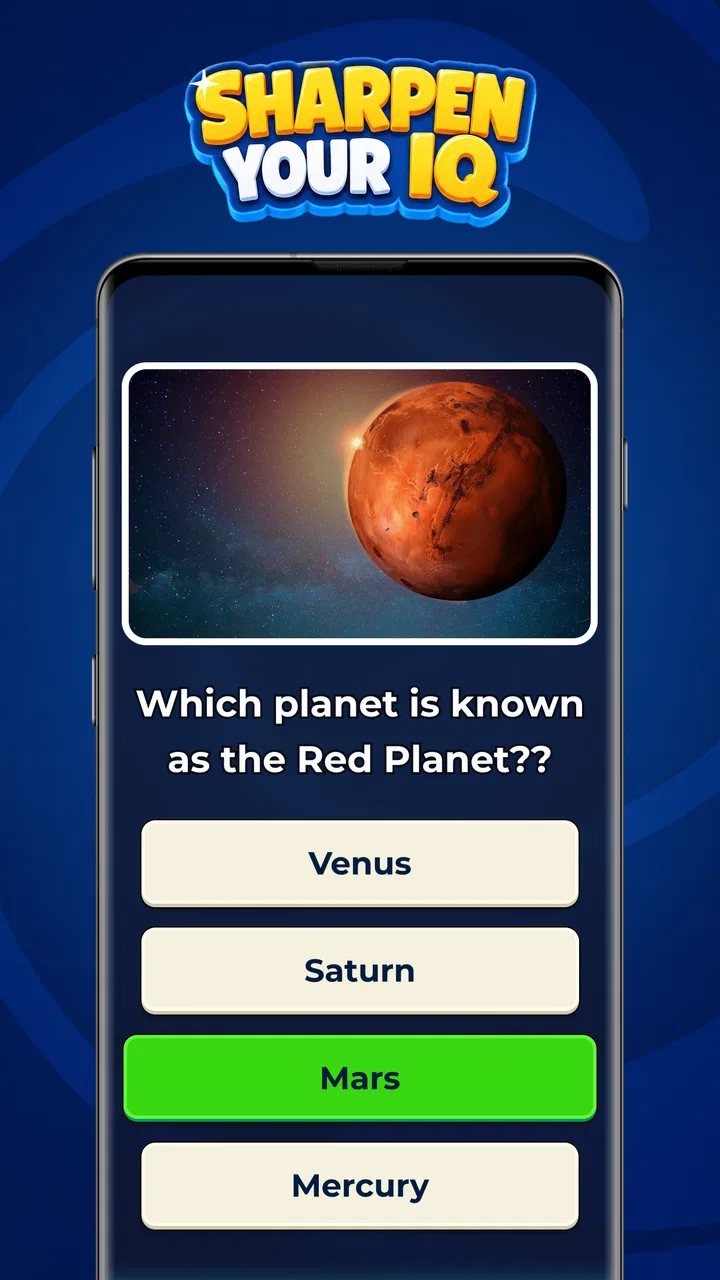
Guess The Answer: Trivia Game is a quiz app built around short multiple-choice questions covering subjects such as general knowledge, history, science, entertainment, geography, sports, and everyday facts. After selecting an answer, the game usually reveals whether it was correct and lets you continue through additional questions. It is designed for casual play, quick challenges, and testing how much you know.
02Is Guess The Answer: Trivia Game free to download and play?
The game can generally be downloaded without an upfront purchase, but the available free content may be supported by advertisements, optional in-app purchases, or both. Depending on the version installed and your device, some features, question packs, hints, or ad-free options may require payment. It is worth checking the store listing and in-app purchase details before downloading.
03Does the game require an internet connection?
An internet connection may be needed for downloading the game, displaying advertisements, synchronizing progress, or accessing updated questions and online features. Some basic trivia rounds may remain playable offline, but this can vary by version and platform. If you plan to play while traveling or without mobile data, test the game after installation to confirm which functions work offline.
04Is Guess The Answer: Trivia Game suitable for children?
The game can be appropriate for older children and families because trivia encourages reading, memory, and general knowledge. However, suitability depends on the questions, advertising, language, and any links or optional purchases included in the app. Parents should review the age rating, privacy information, and in-app purchase settings, especially if children will use the game without supervision.
05What should I know about gameplay, difficulty, and progress?
Gameplay is typically based on choosing the correct answer from several options before moving to the next question. Difficulty may increase as you progress, and some versions include lives, timers, hints, streaks, levels, or score-based challenges. Incorrect answers can sometimes reduce progress or require watching an advertisement, so the experience may feel more competitive than a simple casual quiz.
Pros
- Wide variety of trivia topics keeps rounds interesting.
- Quick questions make it easy to play during short breaks.
- Simple controls are suitable for players of all ages.
- Helpful hints can assist when you get stuck.
- Progression and scoring encourage replaying and improving.
Cons
- Some questions may feel too easy for experienced trivia fans.
- Ads can interrupt gameplay
- especially between rounds.
- A wrong answer may end a round before you can recover.
- Question difficulty and accuracy may vary by category.
- Extra hints or rewards may require watching ads or purchases.

Guess The Answer: Trivia Game
Gallery